The lab / concept studies
Curiosity.
With a working interface.
A few ways to make the engineering tangible. These are browser simulations and concept illustrations, not operating products or measured performance.
Study 01 / RF sensing
Find a signal in the noise.
Move the signal through a synthetic spectrum. Compare the combined trace with its known components.
The combined trace shows the target signal mixed with interference. Separate the components to see how they overlap.
The component view uses the simulation’s known inputs. It does not demonstrate a detection algorithm or claim that real signals can always be separated.
Study 02 / Distributed observation
A sensor is only
part of the picture.
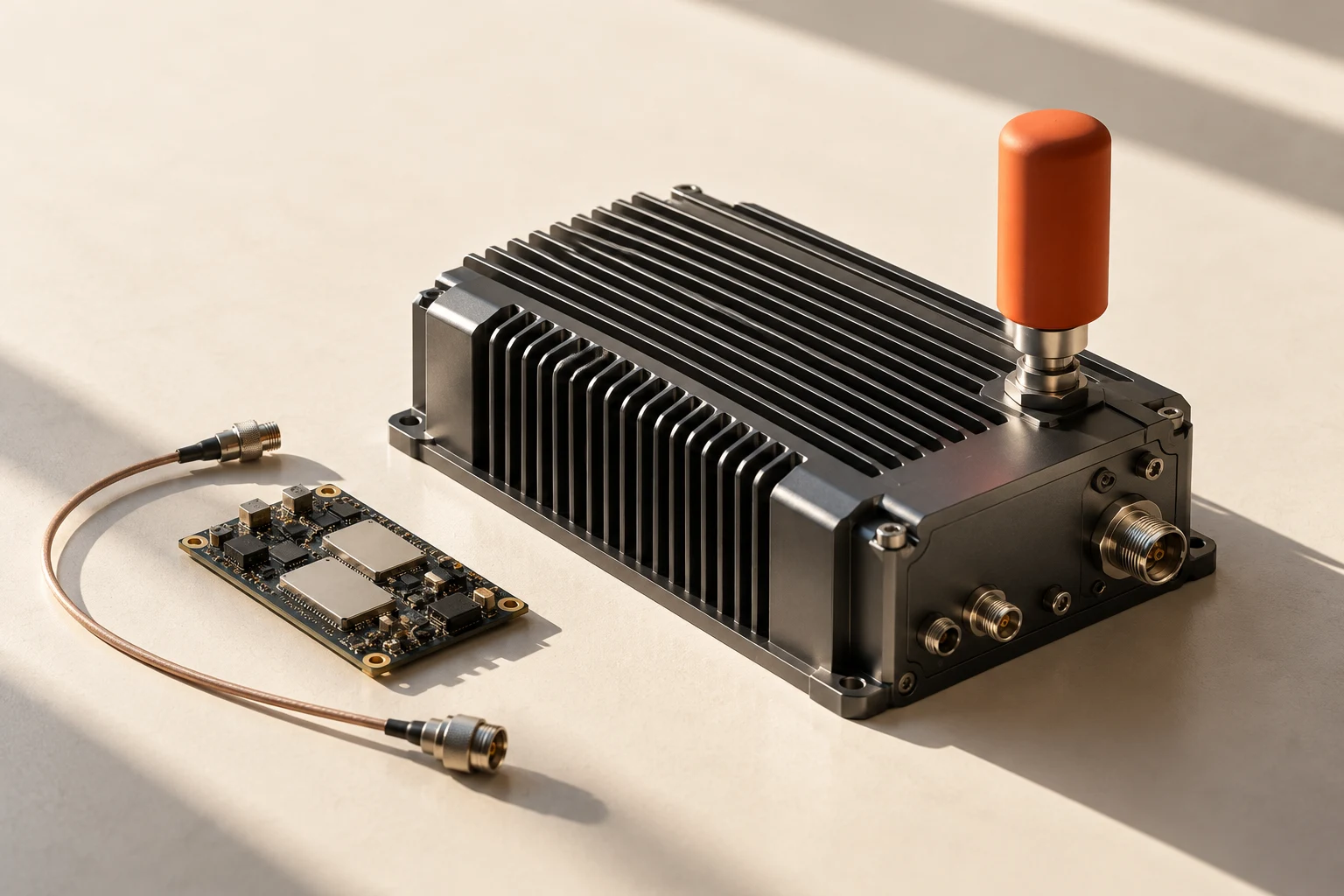
A compact receiver concept raises a larger engineering question: how do you combine observations from multiple locations without overwhelming the analyst?
The proposed work spans time-synchronized collection, receiver management, signal characterization and a common data interface. Its value would depend on calibration, synchronization and the conditions in which it operates.
RF sensing capabilities ↗Study 03 / Mission software
Different sources.
One thread to follow.
Select an observation to explore how an analyst application could connect signals, sensor status and related events. All observations below are invented.
An emission worth a closer look.
Two simulated receivers observe a burst in the same channel. An analyst could compare timing, spectrum shape and prior observations before assigning a classification.
The wider question
Where could this
engineering be useful?
Use the fictional company profile to explore real, sourced government needs in a Whitespace demonstration.